
Food is Medicine (FIM) represents a range of food-based interventions and services designed to prevent, manage, and treat diet-sensitive health conditions and reduce health disparities, integrated within the health care setting.
Different program models are designed to address varying levels of diet-sensitive conditions and broader social needs. Eligibility for these programs is based on clinical conditions and comorbidities, and often but not always on additional social or behavioral risk factors such as income, food insecurity, or limitations in instrumental activities of daily living (IADLs).
These models include:

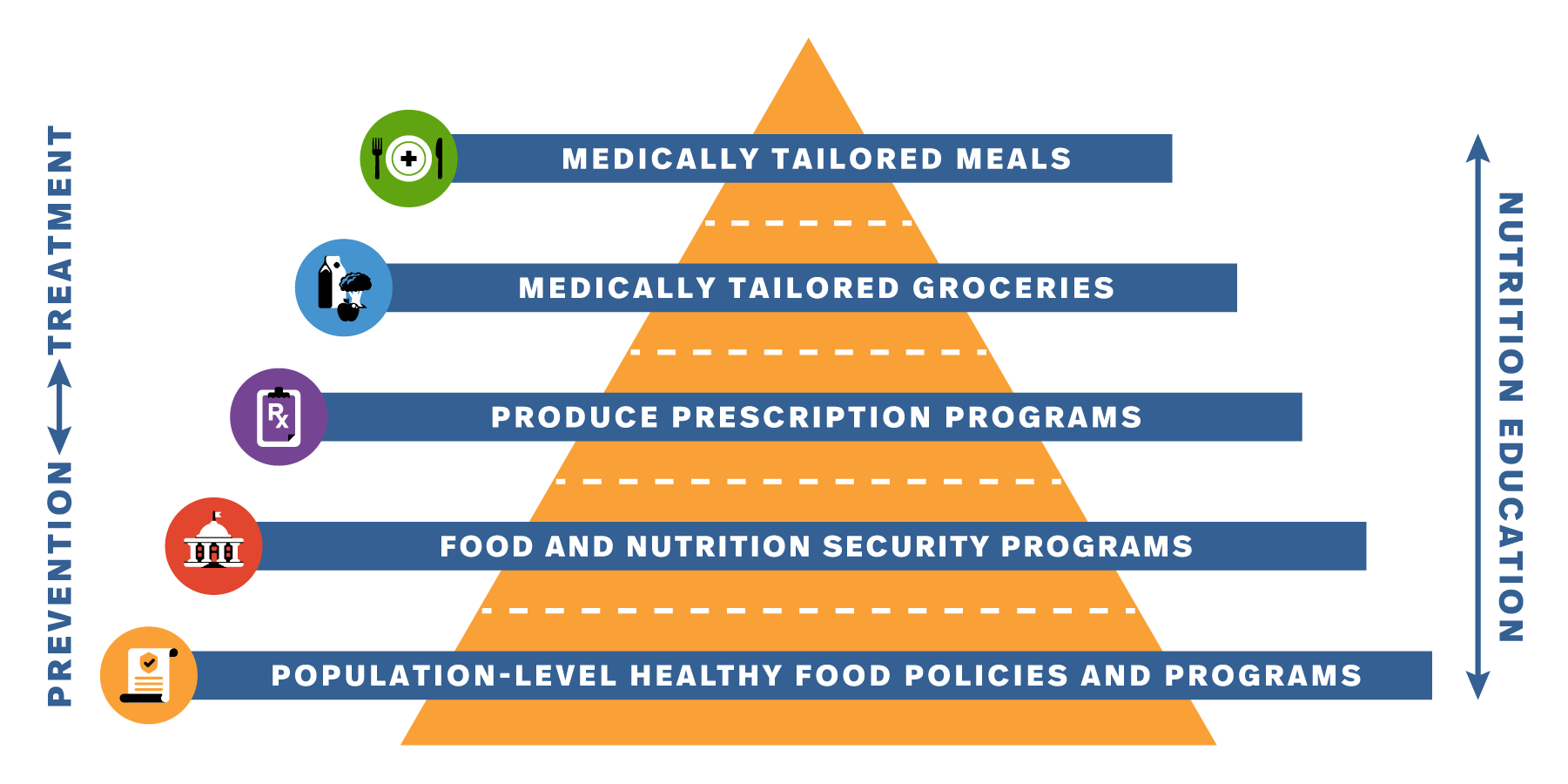
Medically Tailored Meals
Medically Tailored Meals (MTMs) are fully prepared meals for patients with severe, complex, or chronic conditions based on therapeutic, evidence-based dietary recommendations.

Medically Tailored Groceries
Medically Tailored Groceries (MTGs) are healthy, curated grocery items (perishable or nonperishable) that aim to treat specific diet-sensitive conditions and support health.

Produce Prescription Programs
Produce Prescriptions (PRx) provide fruits and vegetables, often fresh but also sometimes frozen or canned with little added salt, sugar, or fat, to individuals with specific nutritional needs.
Nutrition Security Programs
Nutrition Security Programs include the Supplemental Nutrition Assistance Program (SNAP), WIC, and school meals, and may be complementary to FIM programs.
In addition, Population-Level Food Policies play an important role in shaping the nutritional landscape of the community, supporting healthcare-based FIM initiatives. These include, for example, public education and guidance such as the Dietary Guidelines for Americans, the Nutrition Facts panel on food packages, and menu labeling in restaurants. Other relevant policies include food safety regulations established by the FDA around food ingredients, additives, contaminants, and risks of foodborne infectious illness. Some local jurisdictions have passed taxes on soda; and many states are considering or implementing new policies to address ultra-processed food.
The Food is Medicine pyramid provides a visual map of these approaches. Programs in the top tiers (i.e., MTM and MTG) are typically designed for patients with more significant diet-related conditions and the greatest treatment needs, while lower tiers (i.e., PRx and nutrition security programs) can have much broader impacts for both managing and preventing diet-sensitive chronic illnesses.
The Food is Medicine Pyramid
Today, an individual may reach these varied programs through different pathways, such as referrals or prescriptions from health care providers or hospital staff, community access points like food banks, food pantries, and social service organizations, or through state-based assistance programs and health plan care managers. This fragmented approach means that navigating and enrolling in FIM programs can vary widely depending on a person’s location, circumstances, location, health literacy, and good fortune.
A key goal of this toolkit is to encourage more uniform and evidence-based adoption of FIM approaches by health care providers, making these vital services more readily and equitably available to those who need them.